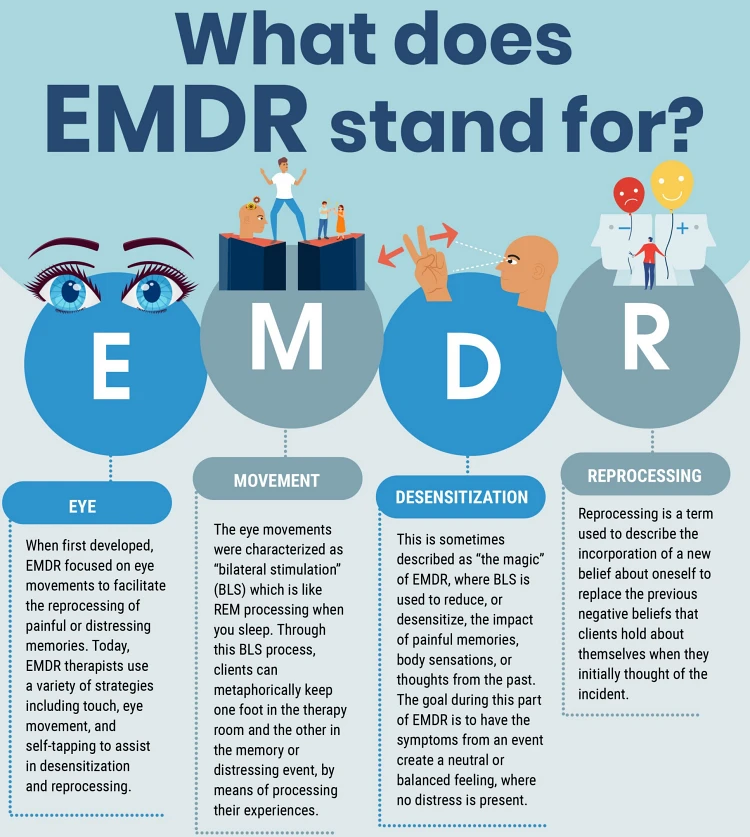
EMDR stands for Eye Movement Desensitization and Reprocessing. What is EMDR therapy? It’s a trauma-focused therapy designed to help people heal from distressing or traumatic experiences. But exactly what is EMDR therapy involving? It involves structured sessions facilitated by a trained therapist using something called bilateral stimulation.
In simple terms:
EMDR helps the brain reprocess traumatic memories so they no longer feel overwhelming or emotionally charged. The memory doesn’t disappear—but it stops hijacking emotions, reactions, and the nervous system.
How EMDR works
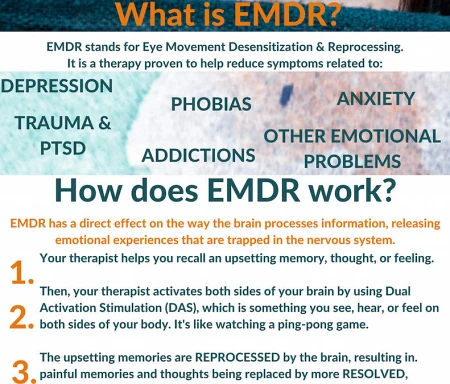
During EMDR therapy, a trained therapist asks the person to briefly focus on a traumatic memory while doing bilateral stimulation, such as:
- Moving the eyes back and forth
- Tapping alternately on each hand
- Listening to alternating sounds
This back-and-forth stimulation helps the brain unstick the memory and store it properly—more like a past event than a current threat.
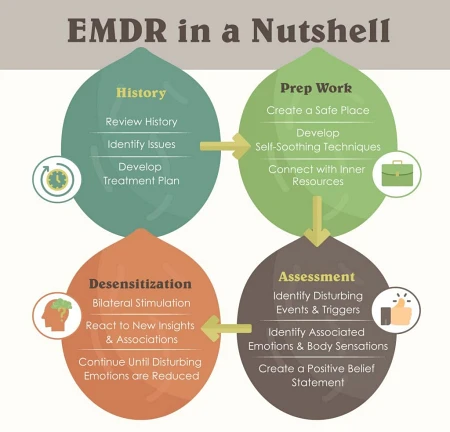
What an EMDR Therapy session looks like
- The therapist helps the person feel safe and grounded
- A specific memory or feeling is identified
- Bilateral stimulation is used while the person notices thoughts, emotions, and body sensations
- The emotional intensity gradually decreases
- More adaptive, calming beliefs replace the distressing ones
It’s not about reliving the trauma in detail or talking it through over and over.
How is EMDR different from talk therapy
- You don’t have to explain everything in words to understand what is EMDR therapy aiming for.
- Progress can happen faster for many people
- It works directly with the nervous system, not just thoughts
Is EMDR Therapy effective?
Yes. EMDR is recognized by:
- • The American Psychological Association
- • The World Health Organization
- • The Department of Veterans Affairs
Important Note
EMDR should be done only with a licensed, trained therapist. It’s structured and safe when done properly. If you’re curious about what is EMDR therapy, Lisa is trained, certified, and experienced. Contact me to schedule an appointment.